La Troia Nel Cortile 🏆
With WiFi and Ethernet
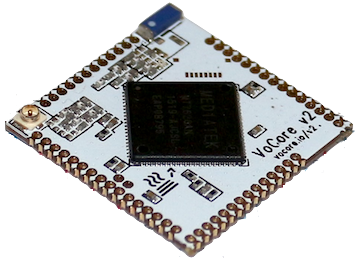

Mini Router only 30g
All-In-One 2.8cm Cube!
La Troia Nel Cortile 🏆
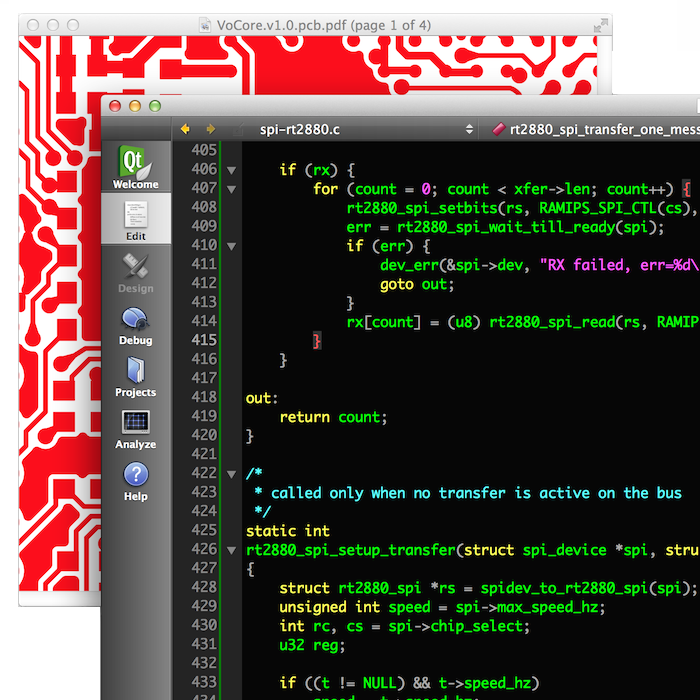
Fully source code
Fully layout design
Open for Everyone
VoCore is open hardware and runs Linux(OpenWrt). It has 128MB DDR, WIFI, USB, UART, SDXC, I2C, SPI, 20+ GPIOs but only one inch square(25.8mm). It will help you to make a smart house, study embedded system or even make the tiniest router in the world.
You will not only get the VoCore but also its hardware design including schematic, circuit board, bill of materials and source code of all applications. You are able to control EVERY BIT of your VoCore.
We invite you join us, help our community improve this open source hardware and use your creative skills to make a more wonderful Internet of Things!


Tiny Size: One square inch, easy to embed to devices.
OpenWrt: Easy to code; super stable, three years no reboot.
Low Cost: low cost, less than 1watt, unmatched performance.
Interfaces: Hardware support USB, Ethernet, SD, I2C, SPI etc.
OpenSource: Both software and hardware, totally FREE
Long Life: Keep production over 10 years, fast email support.
would help in identifying if this is a niche independent work or a specific regional idiom.
The courtyard represents . It is a place of surveillance (every window overlooks it) and shared responsibility. Dirt, scandal, or chaos in the courtyard is not just a personal problem—it is a public spectacle. To introduce a troia (whether a literal sow or a metaphorical woman) into this space is to violate the fundamental code of Italian domesticity: bella figura (maintaining a good appearance) and fare la propria parte (doing one’s part). LA TROIA NEL CORTILE
If "La Troia nel Cortile" were a centerpiece of a story, the narrative would likely focus on . You cannot hide a sow in a courtyard; the smell, the noise, and the sheer physical presence are undeniable. would help in identifying if this is a
To provide you with a as requested, I will assume you wish to analyze this phrase as a literary or metaphorical theme —exploring the symbolism of a sow in a courtyard within Italian culture, folklore, and linguistics. Dirt, scandal, or chaos in the courtyard is
In many ancient Mediterranean cities, history is not just found in museums; it is literally underfoot. "La Troia nel Cortile" captures the moment a resident or developer peels back the surface of a mundane courtyard to find something extraordinary.